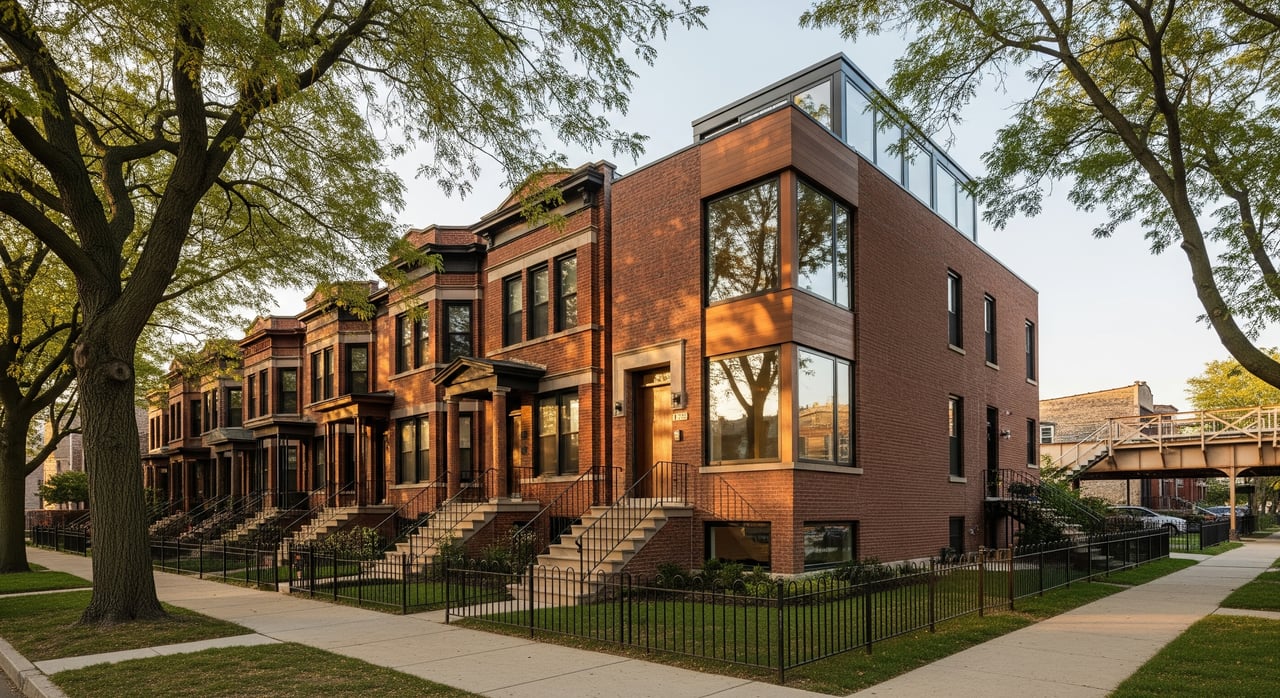
Ravenswood Market Trends: Prices and Inventory
December 25, 2025
December 25, 2025
Wondering where Ravenswood prices and inventory are headed next? In a close-knit neighborhood with vintage homes and active condo buildings, a handful of sales can sway the numbers and the narrative. You want clear, local guidance you can use to time your move and negotiate with confidence. In this guide, you’ll learn how to read the key market signals, what they mean for buyers and sellers, and how to act on them without guesswork. Let’s dive in.
Ravenswood sits on Chicago’s North Side within Cook County and the Chicago–Naperville–Arlington Heights metro. Because neighborhood boundaries vary by source, market figures can shift based on the map you use. For consistency, you should rely on MLS neighborhood definitions from MRED or a clearly stated city map boundary and use that same footprint across all comparisons.
When you request a custom report, we keep the boundary definition consistent and note it on every chart and metric.
Real estate decisions get easier when you track the right few indicators. Focus on these five:
Use the rolling 12-month median price for Ravenswood to smooth out seasonal swings and small-sample spikes. Then layer a 3 to 5-year view to see if any recent change is a blip or a real shift. Pair that with price per square foot by property type to understand how renovated vintage homes compare with newer infill and how condos stack up against single-family homes.
Track active listings at month-end and new listings each month to see how supply is building or tightening. Translate that into months of inventory so you can quickly gauge leverage:
Median DOM tells you how quickly typical homes go under contract. Combine that with the sale-to-list ratio to read the temperature. If DOM trends down and ratios push toward or above 100 percent, expect tighter timelines and more competitive terms. If DOM lengthens and ratios drift below 100 percent, you can negotiate more on price or repairs.
Across many Chicago-area neighborhoods, pricing jumped during 2020 to 2021, cooled in 2022 to 2023, and began to stabilize through 2024 to 2025 as mortgage rates and the broader economy shifted. Use Ravenswood’s rolling 12-month data to see how closely it mirrors that arc. Avoid month-to-month comparisons, which can mislead when only a handful of sales close in a given period.
Also account for seasonality. In Chicago, spring and early summer often bring a surge in new listings and accepted offers, while winter slows. Year-over-year comparisons by month or rolling 12-month views keep that seasonality in check.
Ravenswood offers a blend of vintage single-family homes, two- and three-flats, condominiums, and select newer infill. These submarkets behave differently:
Segment your analysis by property type to avoid mixing apples and oranges. If sample sizes are small, use multi-month medians and note any outlier sales.
Several forces shape Ravenswood’s appeal and pricing power:
You can win in any market when your plan matches the data.
Get fully underwritten pre-approval. It tightens timelines and strengthens your offer if MOI is low.
Narrow to micro-comps. Use the last 6 to 12 months of sales within a quarter to half mile, matched for property type, size, and finish level. Focus on price per square foot as a cross-check.
Tour early and often. In faster stretches, the best listings get immediate attention. Have a showing plan ready before new inventory hits.
Set your inspection strategy. Vintage homes deserve careful attention to roofs, foundations, electrical, and HVAC. Decide in advance where you will seek credits versus repairs.
Use terms as a lever. If sale-to-list ratios are near 100 percent, consider stronger earnest money, flexible closing, or a short attorney review while keeping sensible protections.
Watch association health on condos. Review budgets, reserves, recent projects, and upcoming assessments to avoid surprises.
Plan for a backup path. If you lose a multiple-offer round, have your next-best option queued up so you do not lose momentum.
Even small moves can lift your net proceeds when inventory is tight.
Time your launch. Spring often brings more buyers, but a well-prepared listing can succeed year-round when MOI is low.
Price to the market. Anchor to recent neighborhood comps with similar condition and size. Aim to meet the market rather than “testing” above it, especially if DOM is rising.
Optimize presentation. Light updates, paint, hardware, lighting, and landscape touch-ups can attract more buyers. If you want help funding improvements, ask about Compass Concierge programs that allow you to make strategic upgrades with no upfront cost to you.
Stage with intent. Right-size furniture, declutter, and highlight natural light and original details. Professional photography and video widen early interest.
Consider a pre-listing inspection. Addressing known issues can reduce renegotiation risk and help your home sell closer to list price.
Launch with a plan. Set a crisp showing schedule, offer-response timeline, and marketing cadence so momentum peaks in week one.
Negotiate with the data. Use current DOM, MOI, and sale-to-list ratios to frame counteroffers and appraisal conversations.
Here is a simple way to make clear decisions with data:
If at least three of these signals point in the same direction, you likely have a strong read on whether to move now or wait.
You deserve a clear plan backed by local data and polished execution. With high-touch preparation, media-forward marketing, and access to Compass tools like Concierge, your sale or purchase can move faster and finish stronger. If you want a custom Ravenswood pricing and inventory brief for your property type, reach out to Patrick O'Brien. We will align the data with your goals and timeline.
Stay up to date on the latest real estate trends.


Whether you're preparing to sell, beginning a home search or simply trying to understand your options, let's have a conversation about your goals and the market.

Patrick O'Brien
Office Address
2350 NORTH LINCOLN AVE 3RD FLR
CHICAGO IL 60614