Living in Glenview Suburbs: A Look at Daily Life
May 14, 2026
May 14, 2026
Thinking about trading Chicago’s North Side pace for a suburb with more space and a different daily rhythm? Glenview often comes up for buyers who want easier parking, more private outdoor space, and a lifestyle that still keeps Chicago within reach. If you’re wondering what day-to-day life actually feels like there, this guide will walk you through commuting, errands, housing, recreation, and the practical shifts you can expect. Let’s dive in.
Glenview is a 14-square-mile village in Cook County with 48,705 residents and 19,405 households. Homeownership is a major part of the local housing picture, with a 78.4% homeownership rate. The village also has 34 parks and playgrounds covering more than 290 acres, which gives you a quick sense of how much open space is part of everyday life.
The village reports 7 elementary schools, 2 junior highs, and 1 high school within village limits. That does not tell you whether one area is better than another, but it does show that school-related routines are woven into the daily flow of the community. For many buyers moving from the city, that can make Glenview feel structured, active, and rooted in local routines.
One of the biggest lifestyle shifts from the North Side to Glenview is how you move through the day. In many city neighborhoods, you may be used to walking to coffee, grabbing groceries on the fly, or making spontaneous stops on the way home. In Glenview, daily life is usually more destination-based.
Shopping and activity centers tend to cluster around places like The Glen Town Center and Downtown Glenview. The village has also made Downtown Glenview revitalization a formal priority, which reinforces those activity nodes. In practical terms, you will likely plan errands, recreation, and commuting with a little more intention than you might in the city.
That change is not necessarily a downside. For many buyers, it is exactly the appeal. You often gain more predictable routines, easier parking, and a little more breathing room between destinations.
If you still need regular access to the city, Glenview offers several transportation options. The village sits between I-94 and I-294, about 20 miles north of downtown Chicago. That location keeps regional travel relatively straightforward whether you drive or take the train.
Metra’s Milwaukee District North line serves Glenview at two stations: downtown Glenview and Glen of North Glenview. The village reports an average commute of about 30 to 35 minutes. For many former city residents, that can make Glenview feel connected enough for work while still offering a more suburban home base.
Downtown Glenview also has Amtrak Hiawatha and Empire Builder stops. Pace provides bus service on routes 210, 422, and 423. If you plan to use rail regularly, station parking is a meaningful part of the picture, with 721 spaces at downtown Glenview and 1,261 spaces at Glen of North Glenview.
If you are used to CTA access or highly walkable city blocks, commuting from Glenview may feel more scheduled. You are more likely to think in terms of train times, driving routes, and parking availability. That said, many buyers find the tradeoff worthwhile because home life often comes with more space and less day-to-day friction around parking.
Open space is one of Glenview’s most visible lifestyle advantages. The Glenview Park District manages more than 861 acres, including 26 parks, 13 fieldhouses, and 12.6 miles of walking trails. That scale gives residents a wide range of options for exercise, recreation, and time outdoors.
Several destinations stand out in everyday life. The Grove is a 150-acre National Historic Landmark with nature and history programming. Historic Wagner Farm offers a working and interpretive farm setting, while Park Center includes an indoor track, fitness space, youth programs, senior activities, and event space overlooking Lake Glenview.
For buyers coming from denser parts of Chicago, this can feel like one of the biggest quality-of-life changes. Recreation is not limited to a small park or a quick walk around the block. You have access to a broader network of spaces designed for regular use throughout the year.
Glenview is not a substitute for city-style walkability, but it does offer useful local connections. Bike Glenview helps link trail routes and neighborhood destinations across the village. That practical layer can make it easier to build outdoor movement into your routine, whether that means biking to a park, connecting to a trail, or getting around for shorter local trips.
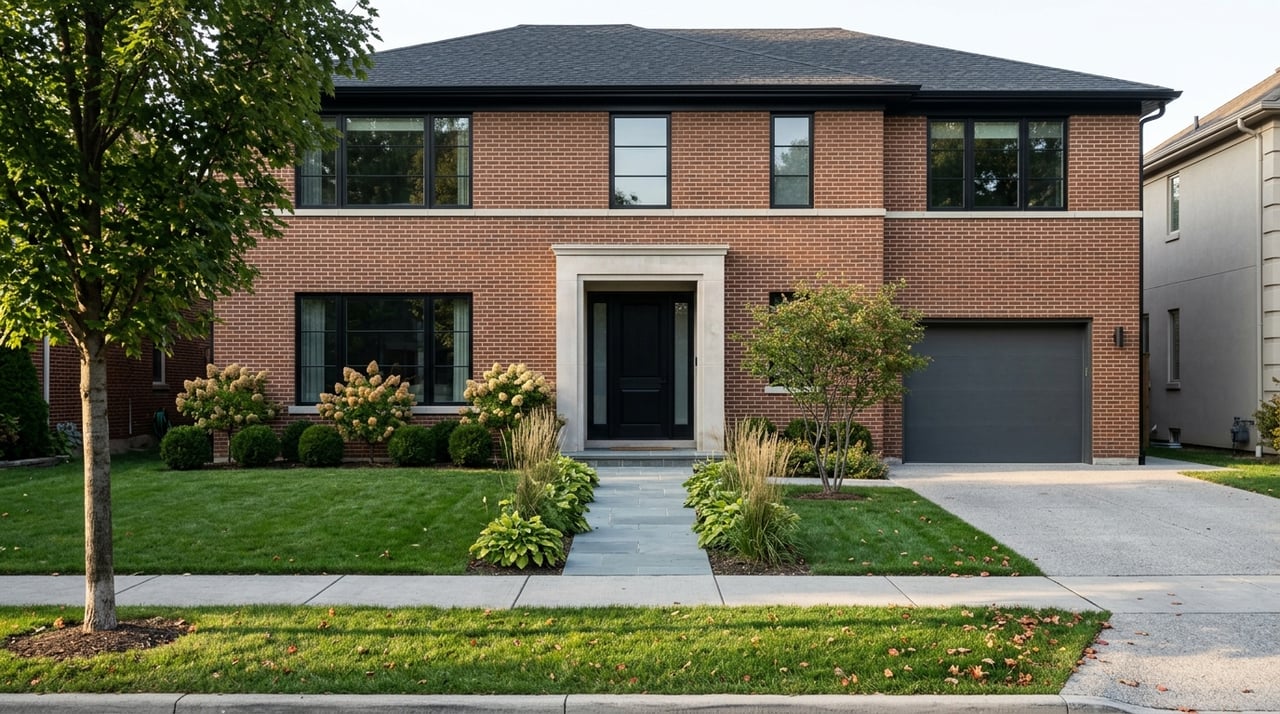
If you are moving from a North Side condo or townhome, Glenview’s housing stock will likely feel more detached-home oriented. According to CMAP’s April 2025 profile, 73.7% of housing units are one-unit structures. By comparison, 12.3% are in buildings with 50 or more units, 9.9% are in buildings with 5 to 49 units, and 2.1% are in buildings with 2 to 4 units.
That mix helps explain why Glenview reads as a classic suburb in many areas, while still offering some condos, apartments, and townhomes. If you want more space but are not ready for a large single-family house, that middle layer can matter. It gives buyers a wider range of entry points than they might expect.
The village also has a mixed-age housing supply. CMAP reports that 29.2% of homes were built from 1960 to 1979, 21.8% from 1940 to 1959, and 28.0% in 2000 or later, with a median year built of 1977. That means you may see everything from older homes with established layouts to newer construction with more modern finishes and floor plans.
One reason Glenview feels different from the city is lot scale. An official proposed single-family development at 1900 E. Lake Avenue included lots ranging from 7,500 to 21,059 square feet, with an average lot size of 8,724 square feet. That is not a villagewide standard, but it offers a useful benchmark for the kind of suburban lot sizes you may encounter.
For many buyers, that translates into practical lifestyle upgrades. You may have more yard space, more distance between homes, and more storage and parking options. Those changes can shape everything from weekend routines to how you host, garden, or simply unwind at home.
Even though Glenview is heavily defined by single-unit homes, the housing story is not one-note. Recent official development examples show that different parts of the village can support very different forms. The Lehigh Townhome Development would add 34 townhouse units, while downtown redevelopment includes a 62-unit apartment building with ground-floor retail.
That matters if you are trying to match lifestyle to housing type. Some buyers want a detached home and larger lot, while others want lower-maintenance living closer to shops or transit. Glenview offers both, but not in the same way or in every pocket of the village.
If you are coming from Chicago’s North Side, the first changes you notice are usually not abstract. They are practical. You may notice that parking is easier, destinations are farther apart, and your week starts to run on a more deliberate schedule.
You may also notice that recreation becomes more built into your routine. Instead of squeezing in outdoor time where you can, you may find yourself choosing from trails, parks, fieldhouses, or large community destinations. For some buyers, that feels like a major lifestyle upgrade.
At the same time, Glenview still keeps you connected to Chicago through Metra, major highways, and regional transit options. That balance is a big reason it appeals to buyers who are not looking to fully disconnect from the city. It offers a different pace, not total separation.
Glenview may be a strong fit if you want more space, a more residential daily rhythm, and access to substantial parks and recreation. It can also make sense if you want housing options that include single-family homes, townhomes, condos, and apartments, depending on the area. The key is knowing which version of Glenview best matches your routine and goals.
If you are weighing a move from the North Side to the suburbs, it helps to look beyond square footage alone. Commute patterns, errand flow, outdoor access, and housing style all shape how a place feels once you actually live there. That is where local guidance can make the decision much clearer.
If you’re exploring a move from Chicago to Glenview and want clear, practical guidance on what fits your lifestyle, connect with Patrick O'Brien. He brings a thoughtful, high-touch approach to helping buyers compare city and suburban options with confidence.
Stay up to date on the latest real estate trends.
Whether you're preparing to sell, beginning a home search or simply trying to understand your options, let's have a conversation about your goals and the market.

Patrick O'Brien
Office Address
2350 NORTH LINCOLN AVE 3RD FLR
CHICAGO IL 60614