Ravenswood Two-Flat Buyer Guide for Live-In Investing
June 4, 2026
June 4, 2026
Thinking about buying a two-flat in Ravenswood so you can live in one unit and rent the other? It is one of the few property types that can give you a home, an income stream, and a long-term asset in the same purchase. If you want a practical look at how this works in Ravenswood, what to watch for, and how to plan like a smart buyer, you are in the right place. Let’s dive in.
Ravenswood has a lot going for this strategy. The neighborhood developed around rail access and still has the kind of housing stock that fits owner-occupants who want to offset costs with rental income. You will find a mix of small houses, apartment buildings, and classic two-flats that reflect that history.
It is also one of the more transit-connected residential pockets on the North Side. The CTA Brown Line runs daily from Kimball to downtown, and the Metra Ravenswood station at 4800 N. Ravenswood Ave. adds another strong commuting option. For a live-in investor, that matters because rail access often supports steady renter interest.
Ravenswood also offers a clear neighborhood identity. The former industrial corridor along Ravenswood Avenue now includes arts spaces, shopping, and craft beverage businesses, while the broader area remains mostly residential. That mix can make a well-kept rental unit more appealing to tenants who want both convenience and neighborhood character.
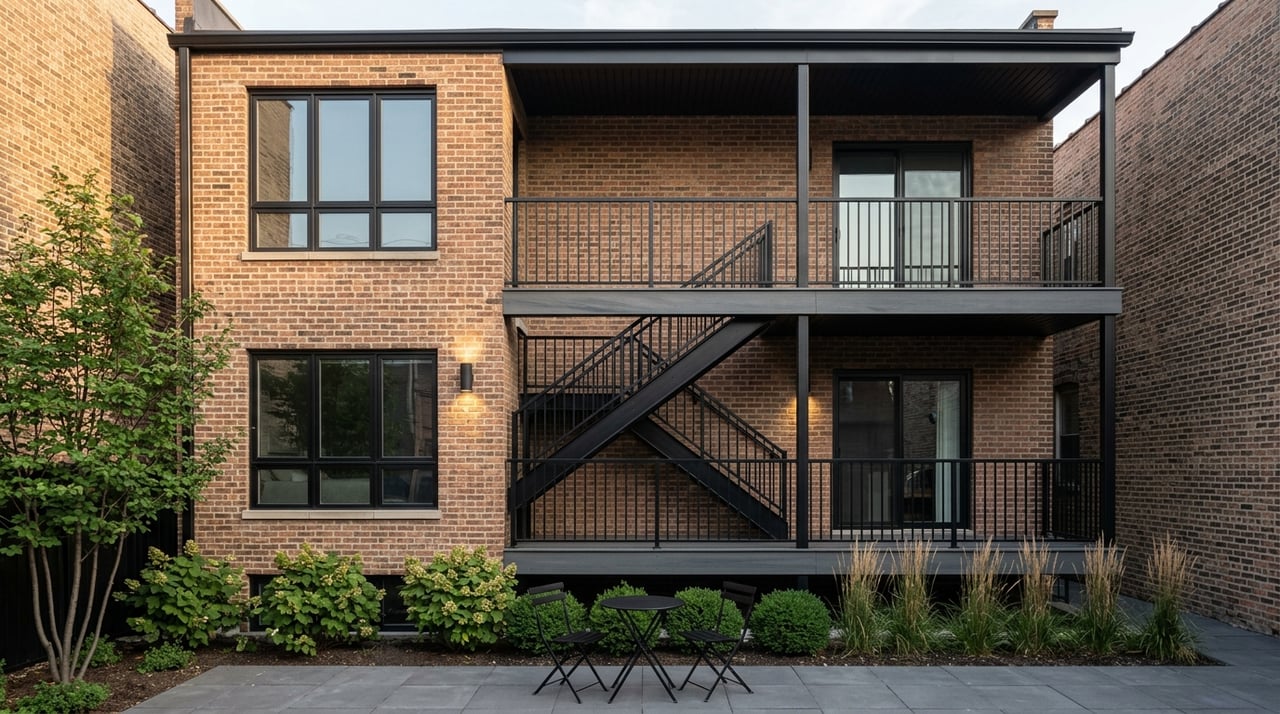
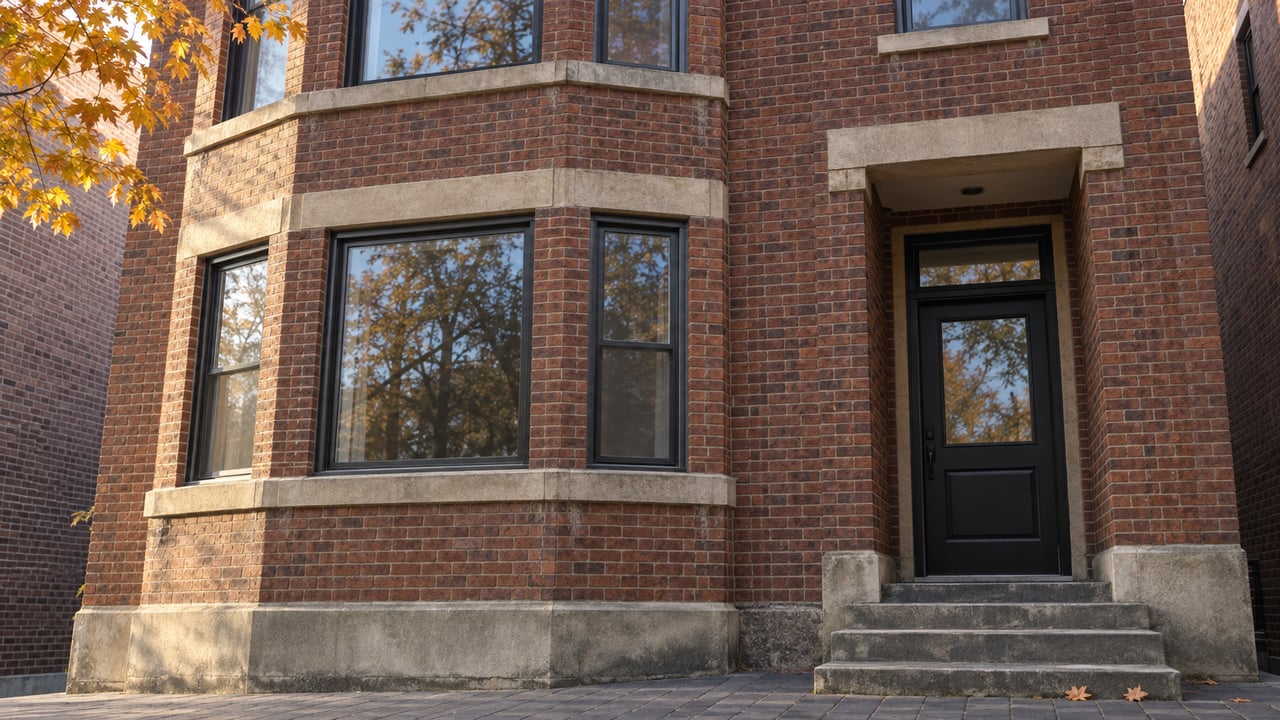
Most Chicago two-flats follow a familiar pattern. They are typically two stories with one apartment on each floor, often built in brick or greystone. Common features include bay windows, side-entry porches, and narrow gangways between buildings.
These buildings are not a niche product in Chicago. According to the Chicago Architecture Center, two- and three-flats make up about a quarter of the city’s housing stock, and Chicago has more than 76,000 two-unit apartment buildings. Most were built between 1900 and 1920, which means many Ravenswood two-flats are part of a fixed, aging supply.
That age can be part of the appeal, but it also shapes your budget. In many cases, the goal is not adding more square footage. It is making an older building function well for modern living and modern renting.
If you are evaluating a Ravenswood two-flat, pay close attention to these items:
Because many of these properties were built before 1978, lead-paint risk should also be part of your planning. Older charm can be a major plus, but only when the building has been maintained well and updated thoughtfully.
One reason the two-flat model is so appealing is that owner-occupant financing can make the purchase more accessible than some buyers expect. HUD says FHA mortgage insurance is available for one-to-four unit properties used as a principal residence, with down payments as low as 3.5 percent.
There is another important benefit for buyers looking at a two-flat. Freddie Mac supports owner-occupied two-to-four unit primary residences, and rental income from the non-owner-occupied units can be considered when qualifying. That can make a meaningful difference if you are trying to balance purchase power with monthly affordability.
There is one key nuance to understand. Fannie Mae’s guide says the rental income from the unit you plan to occupy generally cannot be used to qualify. In plain terms, the income story is usually built around the other unit, not your future unit.
It is easy to focus on the headline number, but a strong purchase plan goes further. The Consumer Financial Protection Bureau says closing costs commonly run about 2 to 5 percent of the purchase price. It also advises buyers to think about keeping an emergency cushion of at least three to six months of expenses.
That matters even more with a two-flat. You are not just buying a place to live. You are buying a small income-producing building that may need repairs, turnover work, or a short vacancy cushion.
A realistic budget should account for:
A Ravenswood two-flat can be a smart move, but only if you buy with your eyes open. A full independent inspection is essential. The Consumer Financial Protection Bureau advises buyers not to purchase a home without a complete inspection, and that advice is especially important here because you are evaluating both a residence and an investment.
In Ravenswood, many buildings date to the early 20th century. That means you should look closely at the building envelope, foundation, basement conditions, mechanical systems, and signs of past work that may not have been documented clearly. Older properties can perform very well, but surprises tend to be more expensive when you own both the home and the rental unit.
For older Chicago housing, lead-based paint should be treated as a standard part of the buying process. The EPA says 87 percent of homes built before 1940 and 24 percent of homes built between 1960 and 1978 contain some lead-based paint. In a neighborhood with many early 20th-century buildings, this is highly relevant.
Federal law requires sellers and landlords of most pre-1978 housing to disclose known lead-based paint hazards before sale or lease. Buyers also receive a 10-day period to conduct a paint inspection or risk assessment in a sale transaction. For a Ravenswood two-flat, that is a practical step, not a box to check quickly.
If you plan to rent the second unit, you also need a clear picture of the local rules. In Chicago, the Residential Landlord and Tenant Ordinance has a notable exemption for dwelling units in owner-occupied buildings with six units or fewer. A two-flat that you live in may fall under that exemption for much of Chapter 5-12.
That said, the building is not outside the rules altogether. Some protections still apply to every rented unit in those buildings, including the anti-lockout rule. That is why lease terms, required practices, and building-specific obligations deserve careful review before you close and before you place a tenant.
Rental demand in Ravenswood is not just about square footage. It is also about how the property fits the way people want to live. Local sources describe Ravenswood and the surrounding Lincoln Square area as a residential part of the city with parks, restaurants, arts spaces, breweries, distilleries, and tree-lined streets.
For many renters, that combination is attractive. A rental unit that feels move-in ready, offers an easy commute, and preserves the building’s original character while updating key systems will usually stand out more than a similar unit that feels tired or hard to manage.
In practical terms, a Ravenswood two-flat is often strongest when:
That last point matters. In Ravenswood, the best live-in investment properties tend to work well on both levels. They give you a comfortable place to live while also offering a rental unit that tenants can picture themselves calling home.
If you are serious about buying a two-flat in Ravenswood, start by narrowing your search through a practical lens. Focus on buildings where the rentability of the second unit is obvious, the transit story is strong, and the condition does not hide major deferred maintenance.
Then look at the deal in layers. First, ask whether you would be happy living there. Second, ask whether the other unit is likely to lease without heavy additional work. Third, ask whether your cash reserves can support the building through normal repairs, vacancy, and turnover.
This is where experienced local guidance really helps. A good two-flat purchase is not just about spotting charm or running a quick mortgage estimate. It is about balancing condition, financing, neighborhood fit, and long-term sustainability.
If you want help evaluating Ravenswood two-flats with a clear, numbers-minded approach, Patrick O'Brien can help you weigh the home side and the investment side with the kind of local insight that matters in Chicago.
Stay up to date on the latest real estate trends.
Whether you're preparing to sell, beginning a home search or simply trying to understand your options, let's have a conversation about your goals and the market.
Patrick O'Brien
Office Address
2350 NORTH LINCOLN AVE 3RD FLR
CHICAGO IL 60614